
News article

Good ideas take root at Werribee’s Woody Meadow site
12 March 2026
A project at the West Werribee Recycled Water Plant has been used as a key demonstration site as part of a free, national resource designed to help more people and land managers grow a green, diverse native urban garden or landscape.
The Woody Meadow Guidelines were developed by the University of Melbourne and released publicly in November 2025 as part of the Woody Meadow Project.
Greater Western Water’s General Manager Service Delivery Jodie Hallam said the water corporation was thrilled to have been an early, founding investor in the project and part of its success story at a local and national level since then.
“We’re proud to be part of the Woody Meadow Project. Not only is our West Werribee site now an example for others in Victoria and around Australia, but it also demonstrates Greater Western Water’s commitment to heal and care for Country,” she said.
“Our hope is that our site will help spearhead more research about how creating such spaces can help improve and restore underutilised land in need of revegetation, and potentially lead to Woody Meadow sites at other recycled water plants.
Woody Meadows are intentional green spaces designed with Australian native plants and sustainable, low-maintenance, climate-resilient goals in mind.
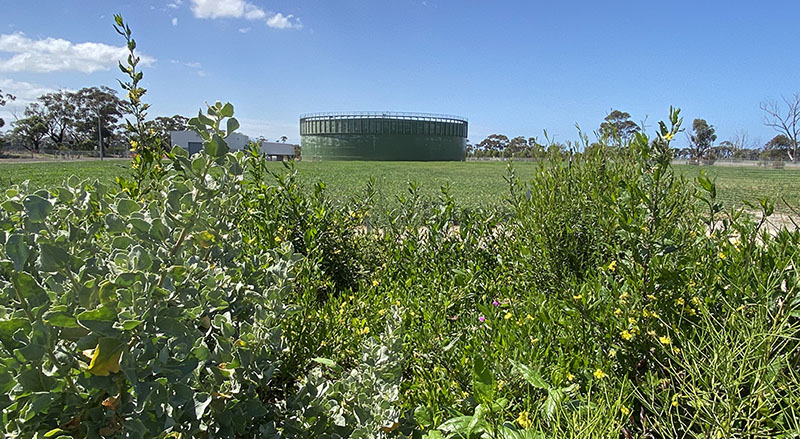
The Woody Meadow at West Werribee in bloom. Photo credit: University of Melbourne
They are typically filled with flowers and foliage that attract native birds and pollinators, contributing to more biodiversity in public spaces and gardens, especially in areas where local fauna and flora are being squeezed out by urban development.
West Werribee RWP’s Woody Meadow site, which consists of two 200m2 sized plots at the treatment plant, was planted in 2023 with 17 different types of native and Indigenous species.
Aligned with the principles behind a Woody Meadow, once established the Werribee site was left to grow dense, then ‘coppiced’ or heavily pruned down after 18 months. It will now be coppiced every two to four years to allow for new plant growth, added density and to increase lifespan.
Thanks to an Australian Research Council grant and partially funded by Greater Western Water and other founding partners, the Woody Meadow Project has been rolled out at 60 sites across Australia since it began in 2015.
Associate Professor Claire Farrell, one of the lead University of Melbourne academics who developed the Woody Meadow project, said the new guidelines would mean even more organisations, government agencies, communities and gardeners could create their own sites for years to come.
“Greater Western Water have been an invaluable research partner and information collected from the Werribee Woody Meadow, as well as the generous knowledge sharing by staff, has really contributed to the success of this project,” she said.
“Greening in Melbourne’s west is critical for liveability and biodiversity in this region, and investing in urban greening research projects like Woody Meadows helps us develop sustainable, cost-effective solutions that meet industry and community needs.
You can learn more about the Woody Meadow Project and guidelines here: Woody Meadow guidelines - Woody Meadow
Media enquiries
0417 459 575
Media@gww.com.au