News article

Greater Western Water collaborates on innovative biochar project
1 December 2023
Greater Western Water (GWW) is continuing our partnership to pilot an innovative pyrolysis technology at our Melton Recycled Water Plant (RWP) that converts biosolids into biochar – a material which can be used as a high-quality, slow-release agricultural fertiliser.
Following the success of the first trial in 2021, GWW is collaborating with South East Water, RMIT University, Intelligent Water Networks and Barwon Water on the latest trial of the Australia-first pyrolysis technology, PYROCO.
GWW beneficially reuses the biosolids produced during wastewater treatment processing at our plants through our composting partners. We're proud to build on our work by participating in this trial, which has the potential to deliver long-term, sustainable solutions for the wider water sector, where biosolids can often be stored as waste or sent to landfill.
The biosolids to biochar project team last week welcomed Member for Melton Steve McGhie to the Melton RWP to see first-hand how the technology works.
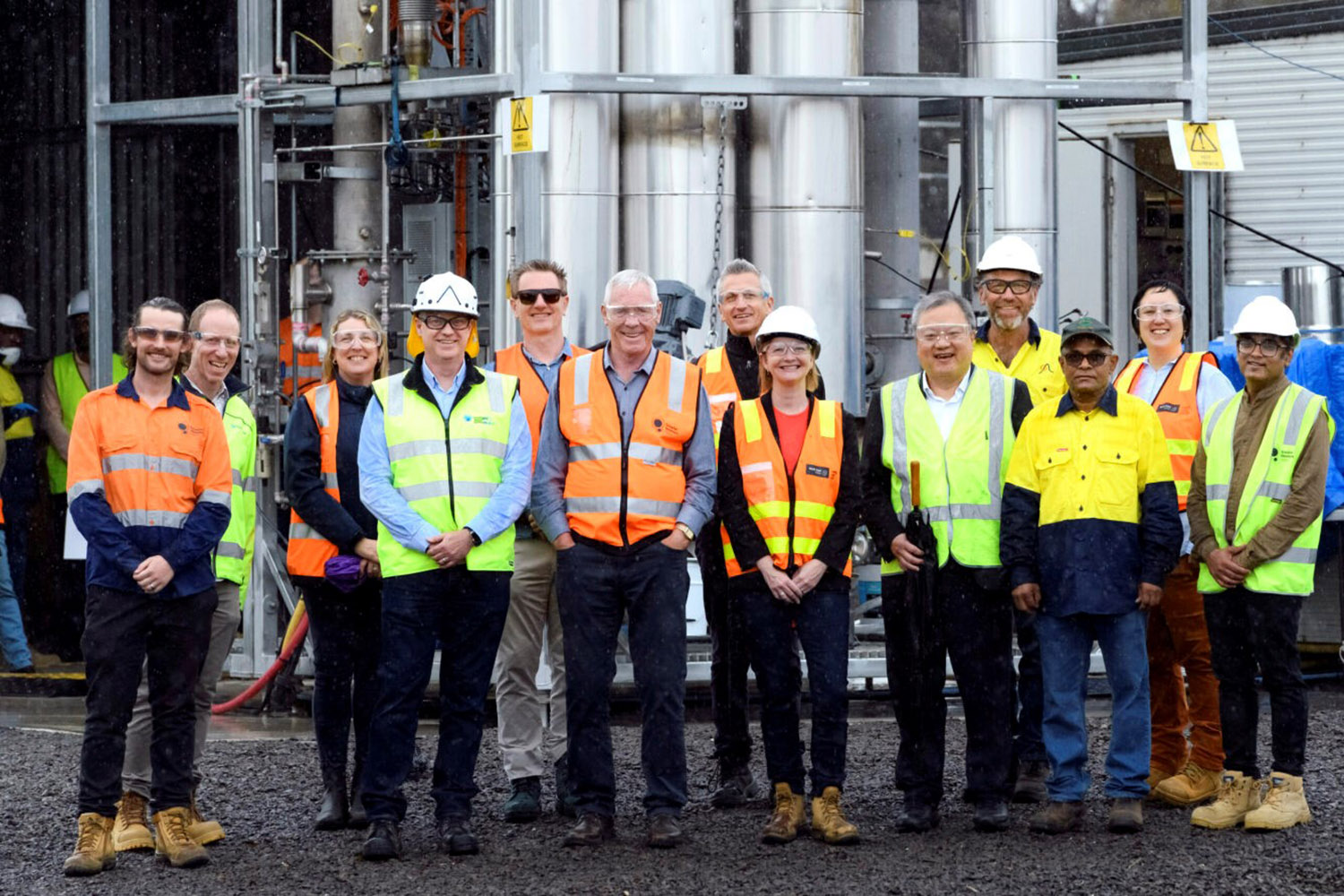
GWW's Biosolids to Biochar project team with Member for Melton Steve McGhie at the Melton RWP.
The technology uses high temperatures to destroy contaminants of concern and produce high-quality biochar, allowing the agriculture industry to use the product safely, with further potential for beneficial reuse in construction and the development of advanced carbon materials.
The current trial will gather crucial information on how the process destroys contaminants of concern and whether biochar quality can be improved if biosolids are blended with other feedstocks such as Food Organics and Green Organics (FOGO).
The project also has the potential to reduce our reliance on non-renewable energy sources whilst also storing carbon, helping us on our path to carbon neutrality.