News article

Western Irrigation Network farms pivot to recycled water
28 August 2026
Greater Western Water (GWW) is helping secure the future of agriculture around Bacchus Marsh through the delivery of a major phase of the Western Irrigation Network (WIN).
Farmers from the Parwan-Balliang agricultural region part of the foundational phase of the project now have access to a year-round supply of recycled water, supporting irrigation across about 1500 hectares of farmland.
GWW Managing Director Cameron FitzGerald said the recycled water from WIN was helping farms plan for yields with greater certainty, independent of local rainfall.
"Recycled water is a safe, sustainable alternative water resource for use on crops, helping reduce pressure on drinking water supplies while improving water security and resilience to climate variability," he said.
"For communities around Bacchus Marsh, the WIN project represents a significant investment in the long-term sustainability of one of Victoria's key agricultural and growth areas."
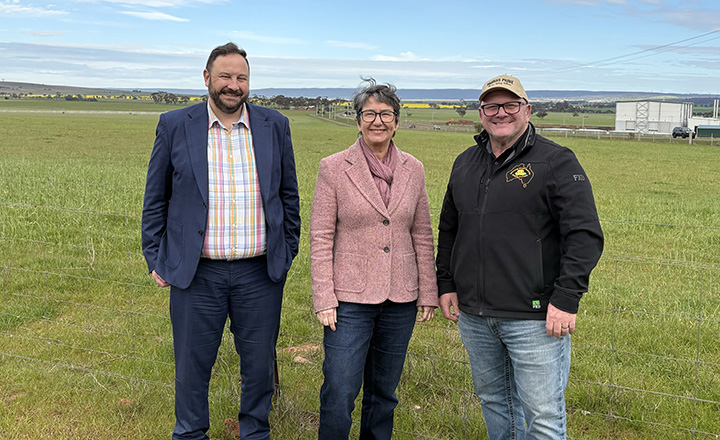
GWW Managing Director Cameron FitzGerald, Minister for Water Michaela Settle and Parwan farmer Pietro Failli in front of a field receiving recycled water thanks to the Western Irrigation Project (WIN).
The $116 million project was jointly funded by the Commonwealth Government, Victorian Government through the National Water Grid Fund, together with GWW and the agribusinesses involved.
It saw the construction of 28km of recycled water pipeline from the Melton Recycled Water Plant to the Parwan-Balliang region, which involved crossing under the Werribee River.
It also involved the creation of three transfer pumping stations and a 1 billion litre winter storage dam.
The scheme will initially supply around 2.4 billion litres of Class C recycled water per year to the WIN farms, with volumes of recycled water use set to be increased as irrigators adapt, expand production and more farms come on board.
By 2050, WIN could deliver up to 18 billion litres of recycled water to farmers each year.
For more about the project visit Western Irrigation Network.
Media enquiries
0417 459 575
Media@gww.com.au